Free UK shipping and returns
250,000+ Happy Customers
Express Next Day UK Delivery
Worldwide Shipping
Subscribe & Get 10% off your first order!
Lifetime Warranty on All Items

Your wedding day is the one occasion where every detail of your outfit will be studied, photographed, and remembered for decades. The flowers will fade. The cake will be eaten. But the photos last forever, and in every one of them, you will be wearing whatever you decided to put on that morning.
This guide walks you through every layer of a groom’s style and outfit, from the foundation of the suit to the finishing touch of a cufflink, so you arrive at the altar looking like you planned every detail, because you did.

Every other decision you make about your wedding day outfit flows from the suit. Get this right and the rest of the look comes together naturally. Get it wrong and no accessory in the world will save you.
The first decision is colour. Navy and charcoal are the most versatile and timeless choices for a wedding suit. Navy reads as warm and approachable while still being deeply formal. Charcoal carries more authority and photographs beautifully in both natural and indoor light. Lighter shades like stone, ivory, and soft grey work well for outdoor ceremonies or warmer climates but require more confidence to pull off.
The second decision is fit. Nothing matters more. A suit that fits your body precisely signals that you take the occasion seriously. Jacket shoulders should sit at the natural edge of your shoulder. The chest should close cleanly without any pulling. Trouser hems should break minimally at the shoe. If you are ordering in advance, build in enough time for alterations.
For grooms who want a suit that is crafted specifically for the occasion, exploring custom wedding suits from specialists who understand the unique demands of bridal tailoring is well worth the investment. The difference between a suit designed for a wedding and a standard business suit lies in the cut, the fabric finish, and the attention to detail that shows in every photograph.
Fabric is one of the most overlooked decisions in groom styling, and one of the most visible in photos.
A mid-weight wool suit in Super 100s or Super 120s is the safest all-season choice. It drapes well, holds its shape through a long day, and resists wrinkles better than most alternatives. For summer weddings or outdoor ceremonies, a wool-linen blend offers structure without heat. For winter weddings in traditional venues, a heavier flannel adds depth and warmth that reads beautifully under dim lighting.
Avoid shiny synthetic blends at all costs. They photograph poorly and signal cheap regardless of the price tag attached to them.
Once the suit is confirmed, the shirt and tie combination should complement it rather than compete with it.
A white or soft white shirt is the safest foundation for any wedding suit colour. It is clean, classic, and impossible to fault in photographs. If you prefer more personality, a pale blue shirt with a white collar adds a subtle point of difference without breaking the formal register.
For ties, choose silk. It sits better, knots more cleanly, and photographs with a richness that other fabrics cannot match. Avoid novelty patterns or overly bold prints. A solid tie in a deep tone, or a subtle jacquard or small geometric print, will serve you far better in photographs twenty years from now than a trend-led choice made under pressure.
This is where a wedding outfit moves from dressed to distinguished. Accessories are the layer that communicates personal taste within a formal framework, and they deserve as much thought as the suit itself.
Pocket square: A white linen pocket square folded into a clean straight edge is the most timeless choice. It works with every suit colour and every tie combination. If you want to introduce colour or pattern, keep it in the same family as your tie without matching it exactly.
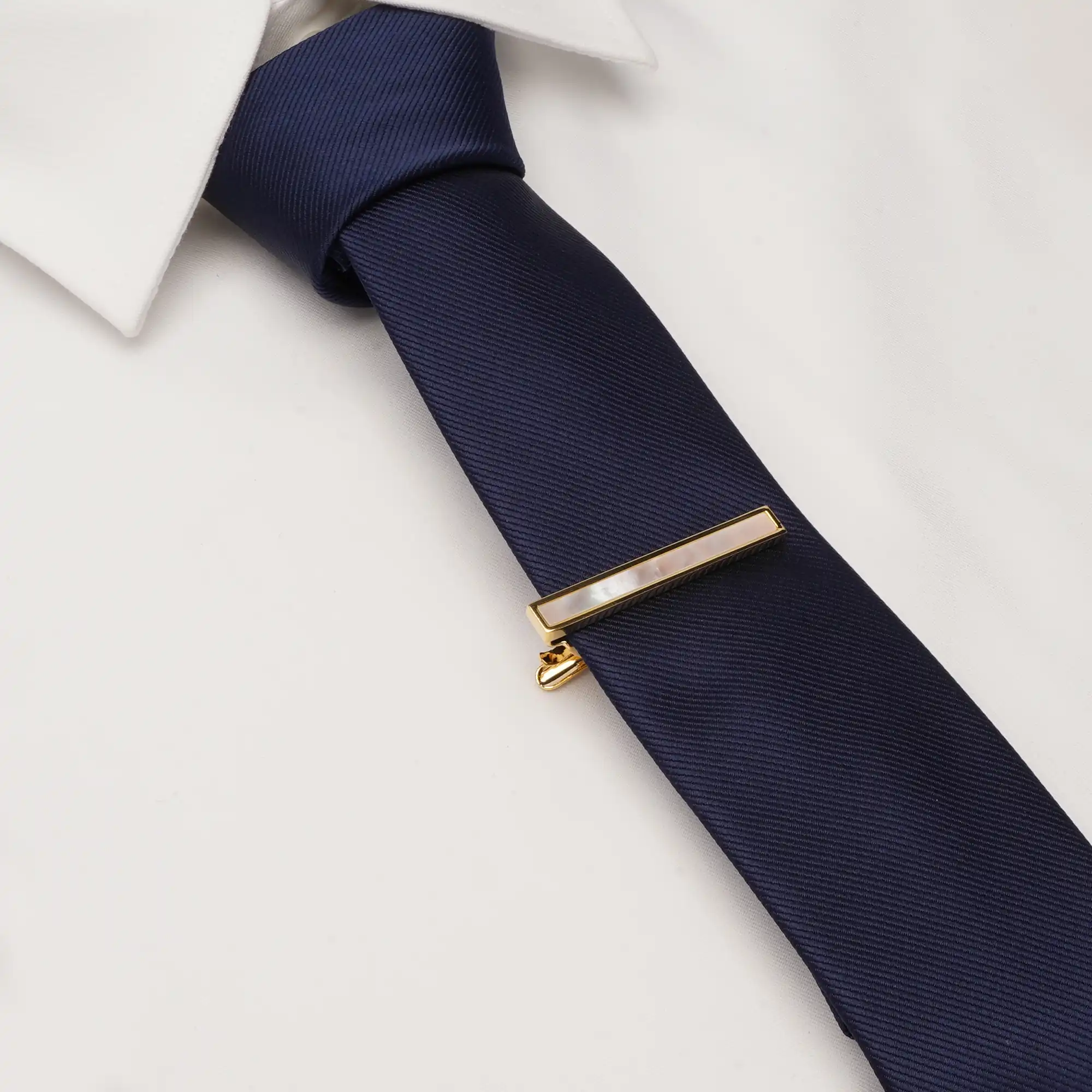
Tie clip: A tie clip is both functional and refined. It keeps the tie in position throughout the day and adds a horizontal line of detail that reads well in photographs. Position it between the third and fourth button of your shirt.
Cufflinks: This is the finishing detail that separates a complete look from a great one. Cufflinks are the piece guests and photographers get close to, and they should be chosen with the same care as the suit. For a dark navy or charcoal suit, the Onyx Portal Cufflinks and Tie Clip Set by Illicium London is a particularly strong choice. The silver and black enamel design is precise and modern without being loud, and the matching tie clip creates a cohesive hardware story across the outfit. Both pieces are hypoallergenic and water-resistant, which matters on a day when nerves and celebrations tend to run high.
Shoes: Black Oxford shoes for formal or traditional weddings. Dark brown for more relaxed or outdoor settings. Polish them the night before. Resoled and well-maintained shoes always look better than new ones worn for the first time.
Watch: Keep it simple and elegant. A dress watch with a leather strap in black or dark brown works for virtually every wedding setting. Leave the sports watch at home.
No suit, regardless of how well it fits or how fine its fabric, survives poor grooming. Hair should be clean and styled consistently with how you wear it day to day. Nails should be trimmed and clean. If you wear facial hair, have it shaped by a professional barber within 48 hours of the wedding.
Fragrance is optional but powerful. If you wear it, keep it light. A heavy cologne in an enclosed ceremony space is a distraction, not an asset.
A groom’s wedding outfit is not assembled in a single afternoon. It is built through a series of deliberate decisions, each one informed by the one before it. Start with the suit, build through the shirt and tie, and finish with accessories that reflect who you are. Every layer matters. Every detail will be seen.
Get it right, and you will look back at those photographs for the rest of your life knowing you did.