Free UK shipping and returns
250,000+ Happy Customers
Express Next Day UK Delivery
Worldwide Shipping
Subscribe & Get 10% off your first order!
Lifetime Warranty on All Items

Norse symbols have quietly become some of the most-worn motifs in men’s jewellery, and it isn’t hard to see why. Each one carries a story and a meaning — something a logo or a plain band simply can’t offer. Wear a Norse pendant and you’re not just wearing silver; you’re wearing strength, or protection, or the idea of finding your way through whatever’s ahead.
The trouble is that these symbols are often worn with only a vague sense of what they stand for, which rather misses the point — because the meaning is the whole appeal. This guide walks through the most significant symbols you’ll find in Norse and Viking jewellery: what each one means, the mythology behind it, and how to wear it, so you can choose a piece that genuinely says something about you rather than one picked on looks alone.
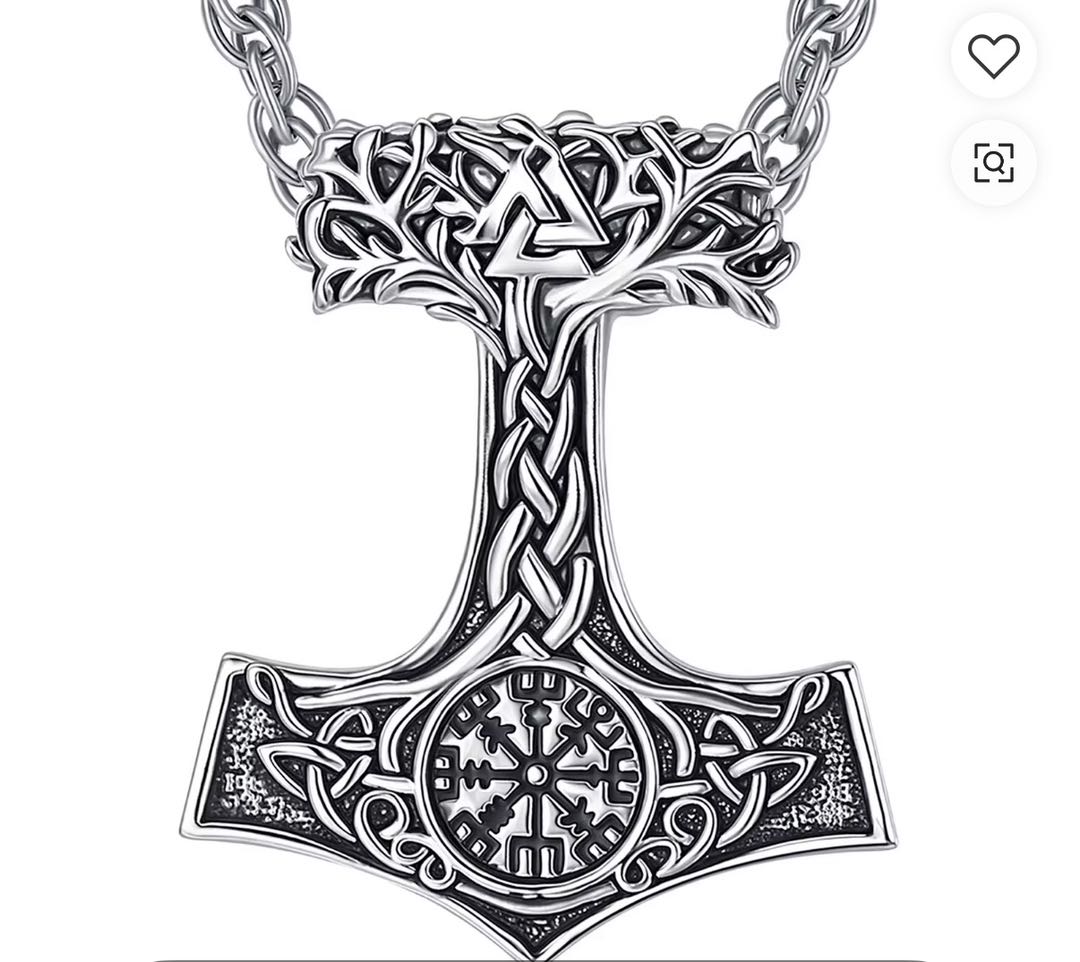
No symbol is more closely tied to the Vikings than Mjölnir, the hammer of Thor. In Norse mythology it was the most fearsome weapon of the gods, capable of levelling mountains — yet it was also a tool of blessing, used to consecrate marriages, births and funerals. The Vikings wore Mjölnir amulets for exactly this duality: strength and protection on one side, blessing and good fortune on the other. Archaeologists have found these hammer pendants right across the Norse world, which tells you how much they meant. It remains the natural starting point for anyone drawn to Norse jewellery, and the most recognisable Norse symbol of them all.
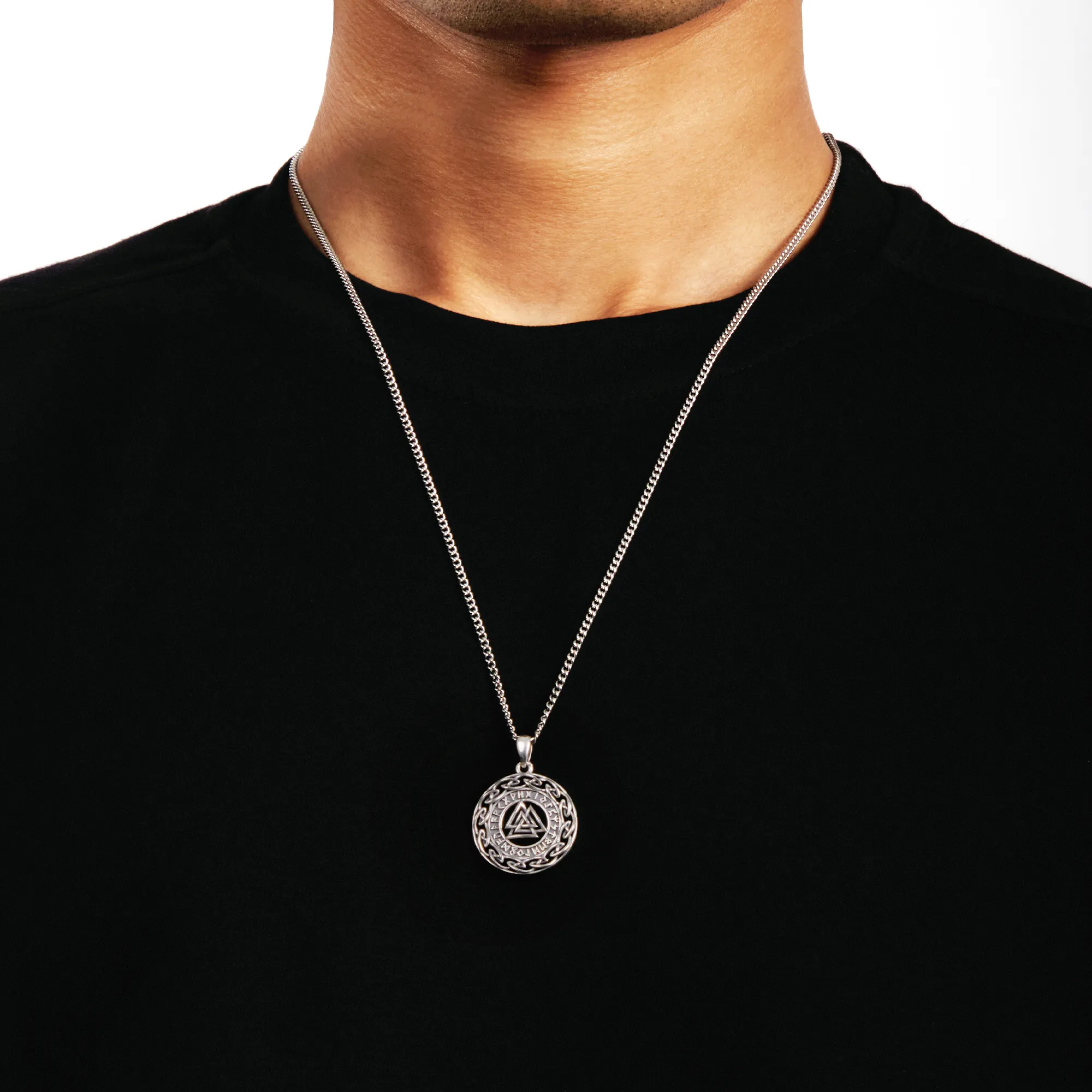
Three interlocking triangles, the Valknut is one of the most striking Norse symbols — and one of the most mysterious. It appears on Viking-age carvings and memorial stones, almost always in connection with Odin and with the slain in battle, which is why it’s widely understood as a symbol of courage in the face of death and of those who fell honourably. Its precise original meaning is lost to history, and that uncertainty only deepens its appeal: a mark of bravery, fate, and the warrior’s acceptance of his own mortality.
Shop: Our Valknut pendant
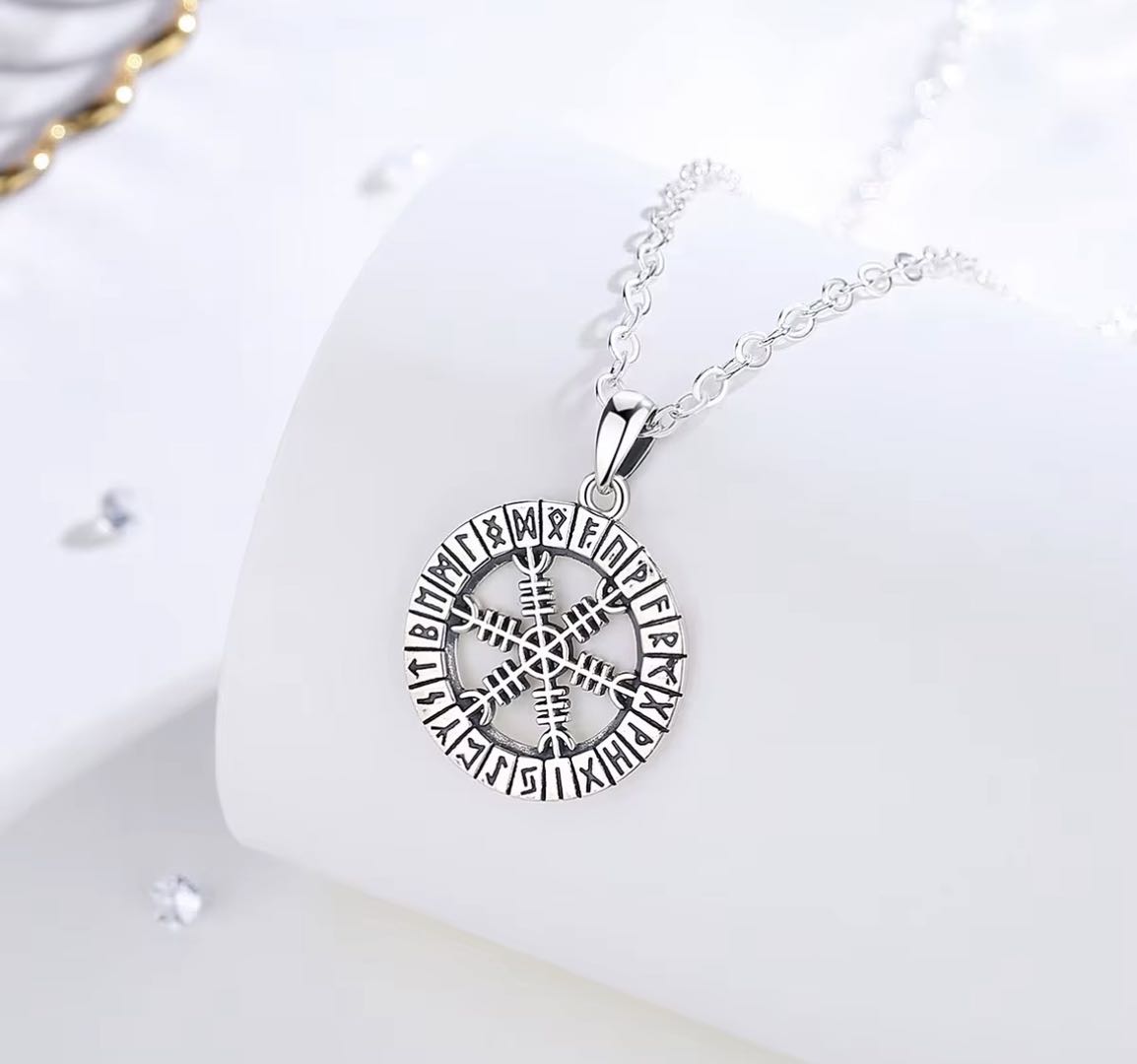
The Vegvísir, often called the Viking compass, is among the most popular Norse symbols worn today — its name translates roughly as “that which shows the way.” According to the tradition that recorded it, anyone carrying the Vegvísir would never lose their way, even through storms and unfamiliar country. It’s worth knowing — and a mark of wearing it well — that the Vegvísir comes from later Icelandic magical manuscripts rather than the Viking age itself. But its meaning has made it one of the most resonant symbols in modern Norse jewellery: guidance, direction, and holding your course whatever the conditions.
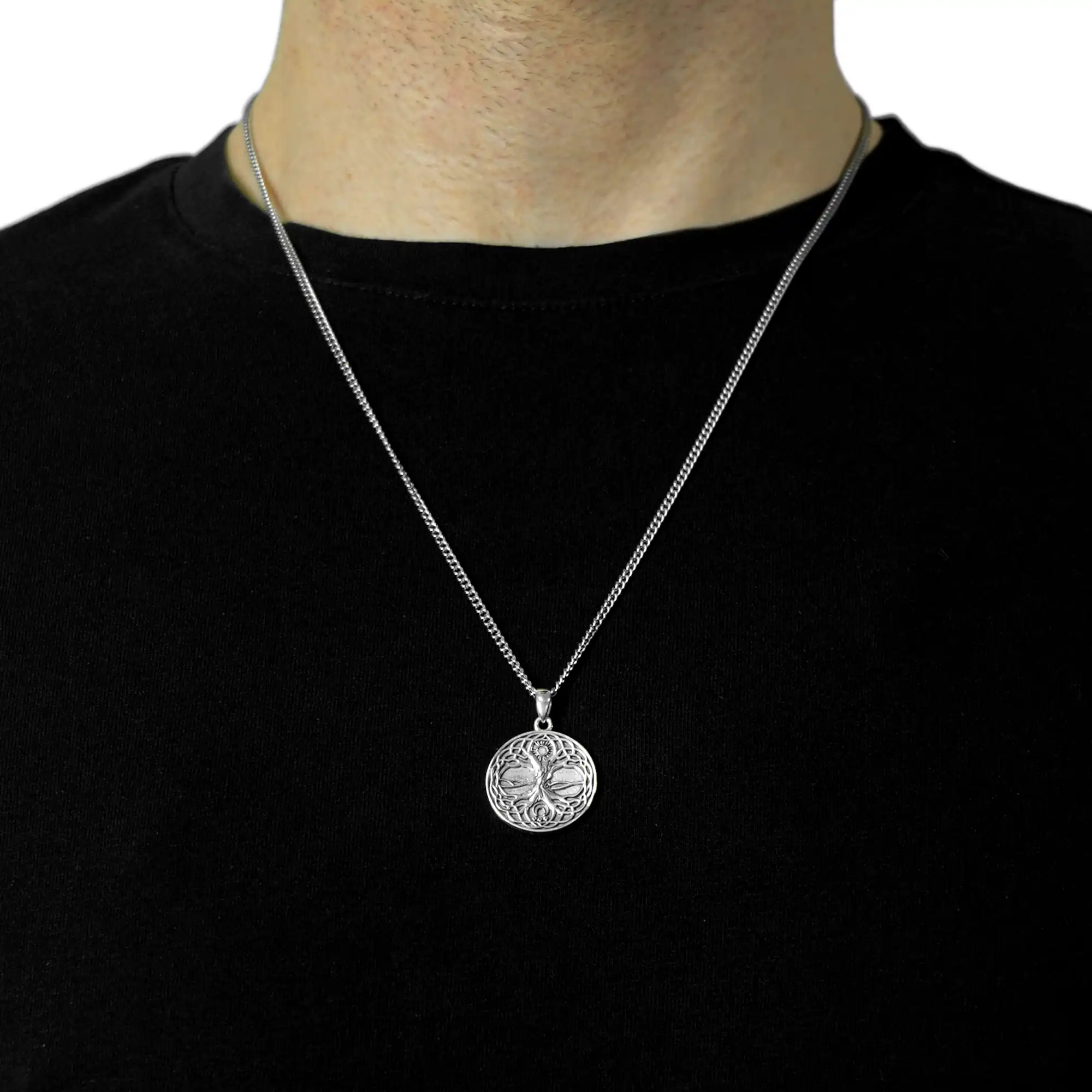
In Norse cosmology, Yggdrasil is the great world tree at the centre of everything, its branches and roots binding together the Nine Worlds — from the realm of the gods to the land of the dead. As a symbol it represents connection, growth, and the link between all living things, past and present. The tree of life appears across many cultures, but in its Norse form it carries this particular sense of everything being bound together. It makes a quietly profound piece to wear, and a favourite for the man drawn to meaning over flash.
Shop: our tree of life piece
The Helm of Awe, or Ægishjálmr, is a bold, eight-armed stave radiating from a central point. Its name means something close to “helm of terror,” and it was associated with protection and with striking fear into one’s enemies — a symbol of invincibility and inner strength. Like the Vegvísir, the stave as we know it is drawn from later Icelandic magical tradition rather than the Viking age proper, but it has become one of the most powerful protective symbols in Norse jewellery — worn as a mark of resilience and standing firm.
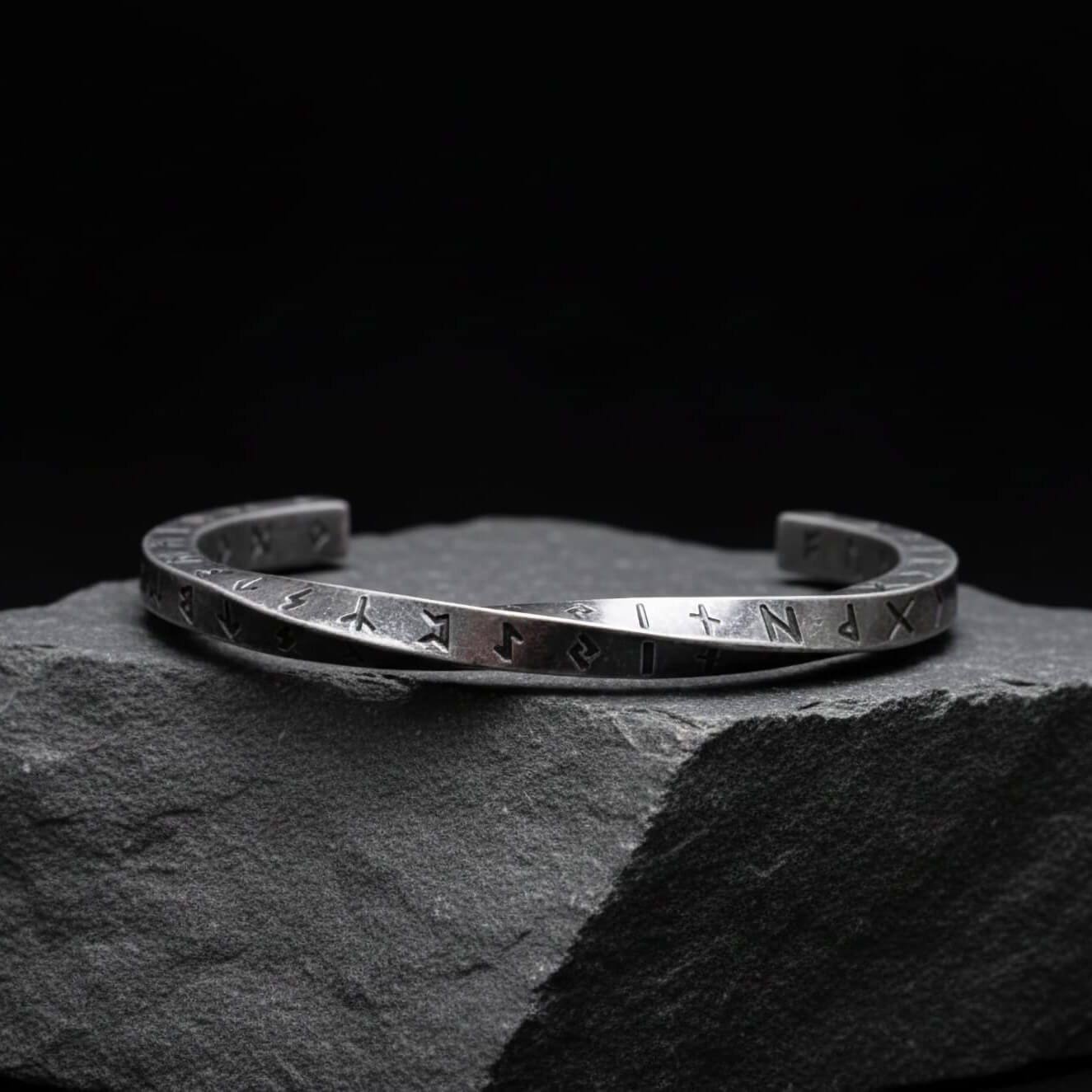
The runes were the written alphabet of the Norse and wider Germanic peoples, but they were always more than letters — each rune carried its own name and meaning, and they were used for inscriptions, charms and divination. Algiz, for example, is associated with protection; others stand for journeys, prosperity or growth. Because each rune has its own significance, runic jewellery is among the most personal you can wear: a single rune chosen for its meaning, or several combined into a bind-rune that’s unique to you. It’s also why runes lend themselves so well to engraving and bespoke pieces.
Animals run all through Norse mythology, and several have become symbols in their own right. Huginn and Muninn — “thought” and “memory” — were Odin’s two ravens, who flew across the world each day and returned to whisper what they had seen, which is why a raven stands for wisdom, insight and Odin himself. The wolf carries a wilder meaning: Fenrir, the great wolf of legend, embodies raw strength and the forces that cannot be contained. You’ll find these creatures across our animal and mythical creature jewellery, for the man drawn to the untamed side of the myths.

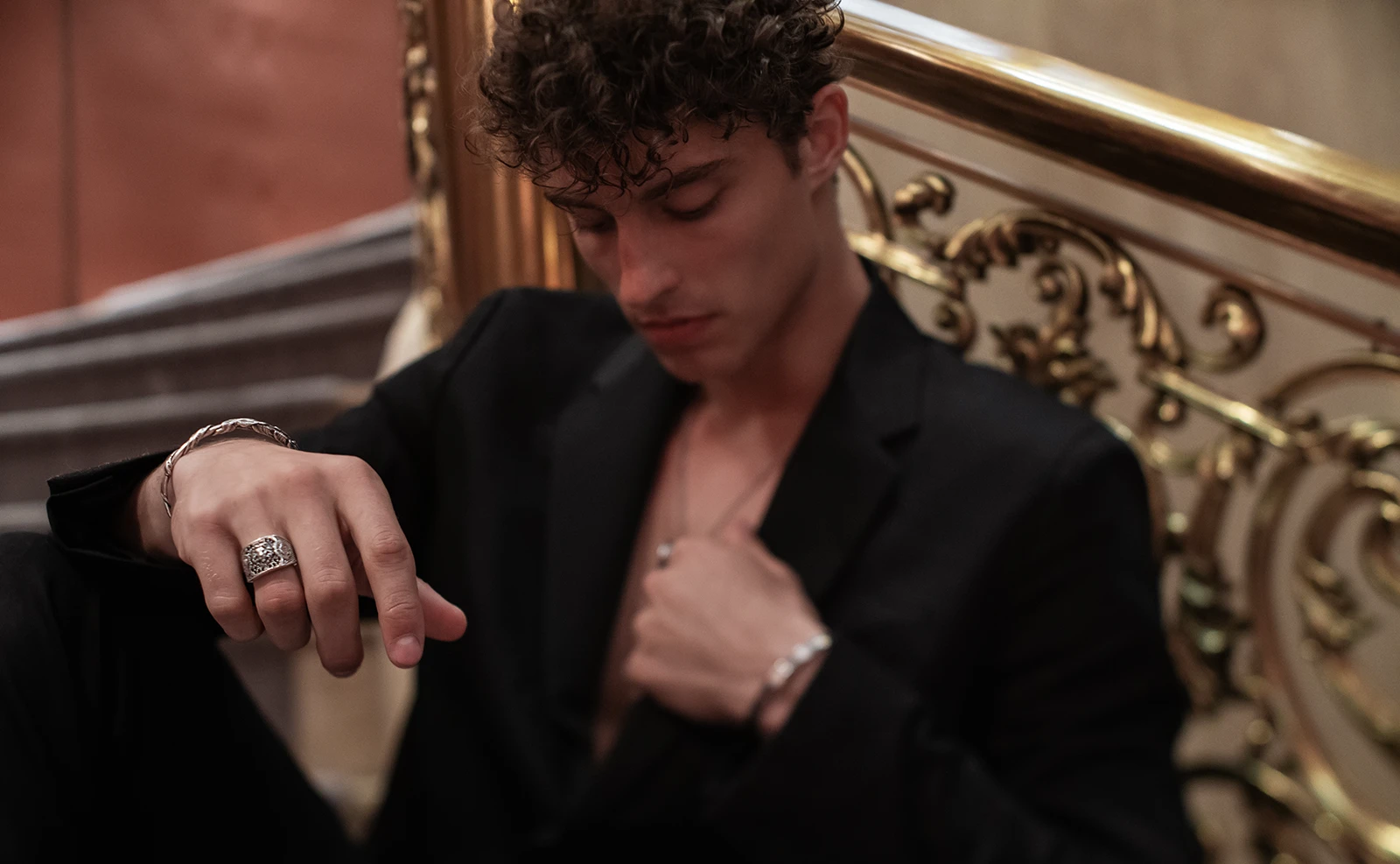
A few words on actually wearing it. The golden rule is restraint: choose one symbol that genuinely means something to you and let it lead, rather than layering on every motif at once. A single pendant on a chain or a leather cord is plenty. Match your metals — if your watch and rings are silver, keep the pendant silver too — and weigh the meaning as much as the look, because the right symbol is one whose meaning you’d be glad to carry every day. Sterling silver is the traditional and most versatile choice: it ages with character, polishes back to a bright finish, and lasts a lifetime.
Whichever symbol speaks to you, the appeal of Norse jewellery is the same — a piece with genuine meaning behind it, drawn from one of the richest mythologies ever told. Explore the full range in our men’s Norse and Viking jewellery collection, each piece handmade in sterling silver and ready to carry whatever meaning you choose for it.

